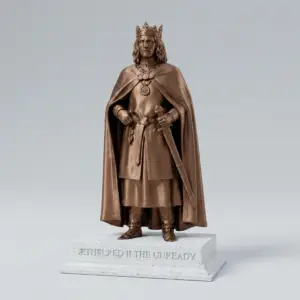
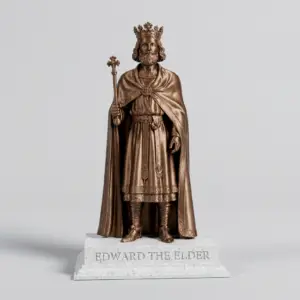
King Richard II

Price range: £36.99 through £37.99

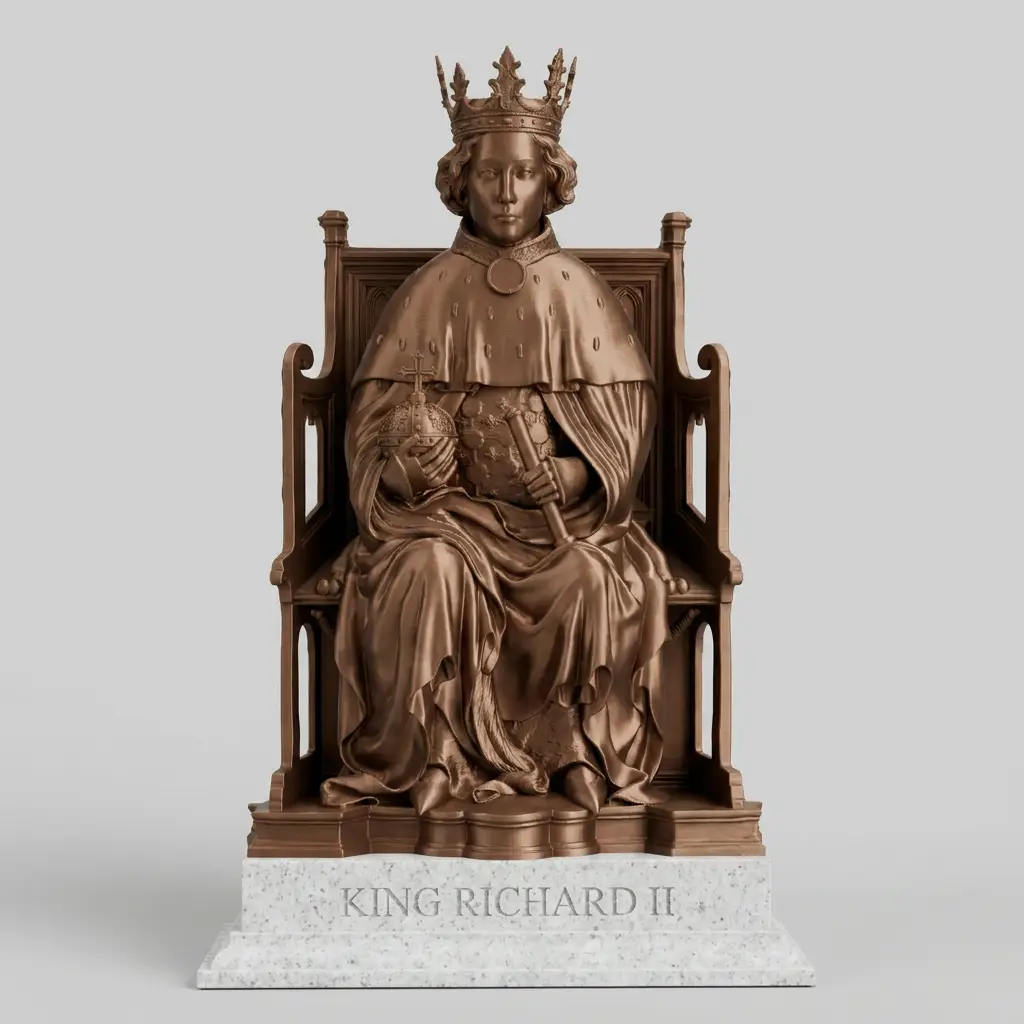
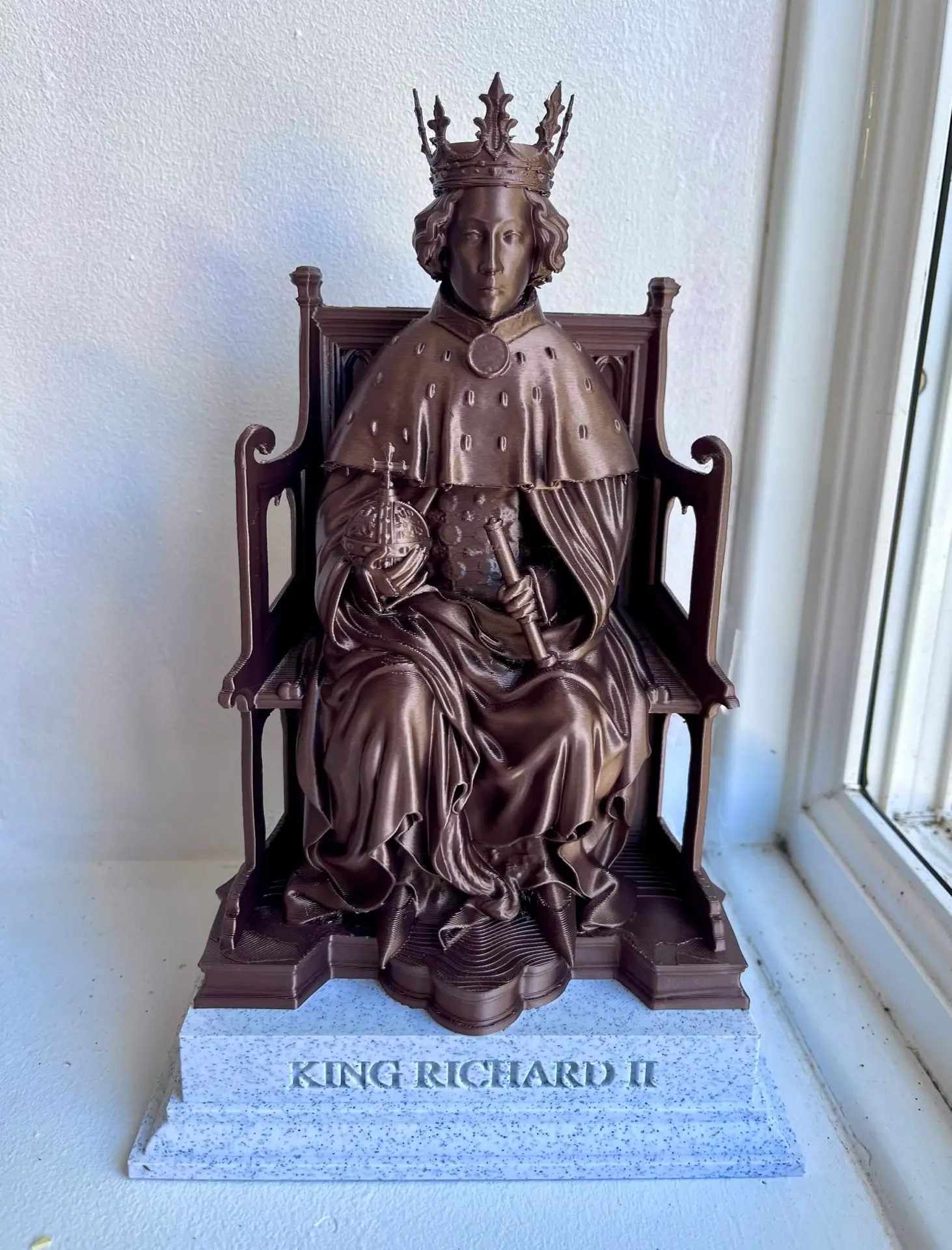
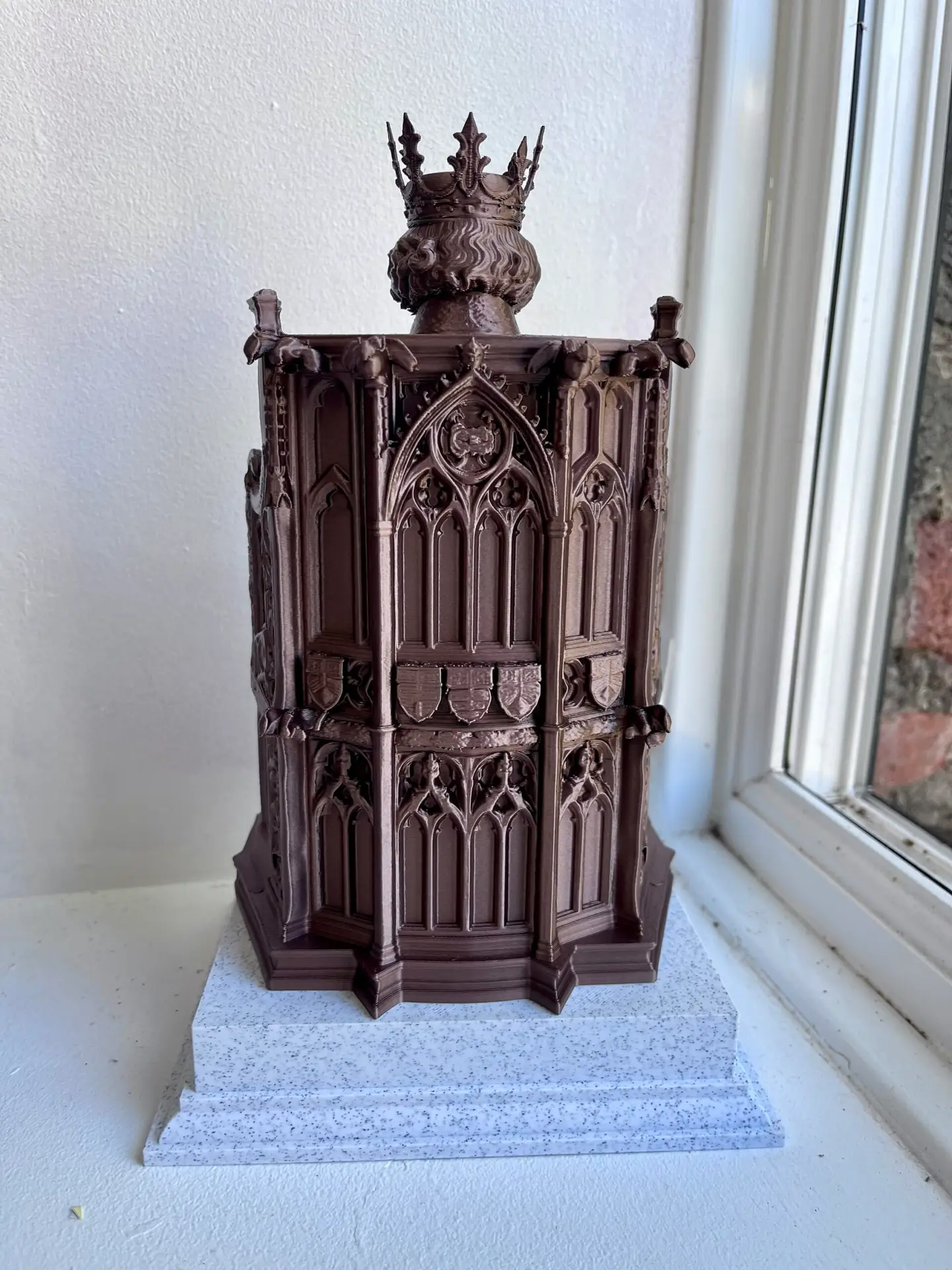
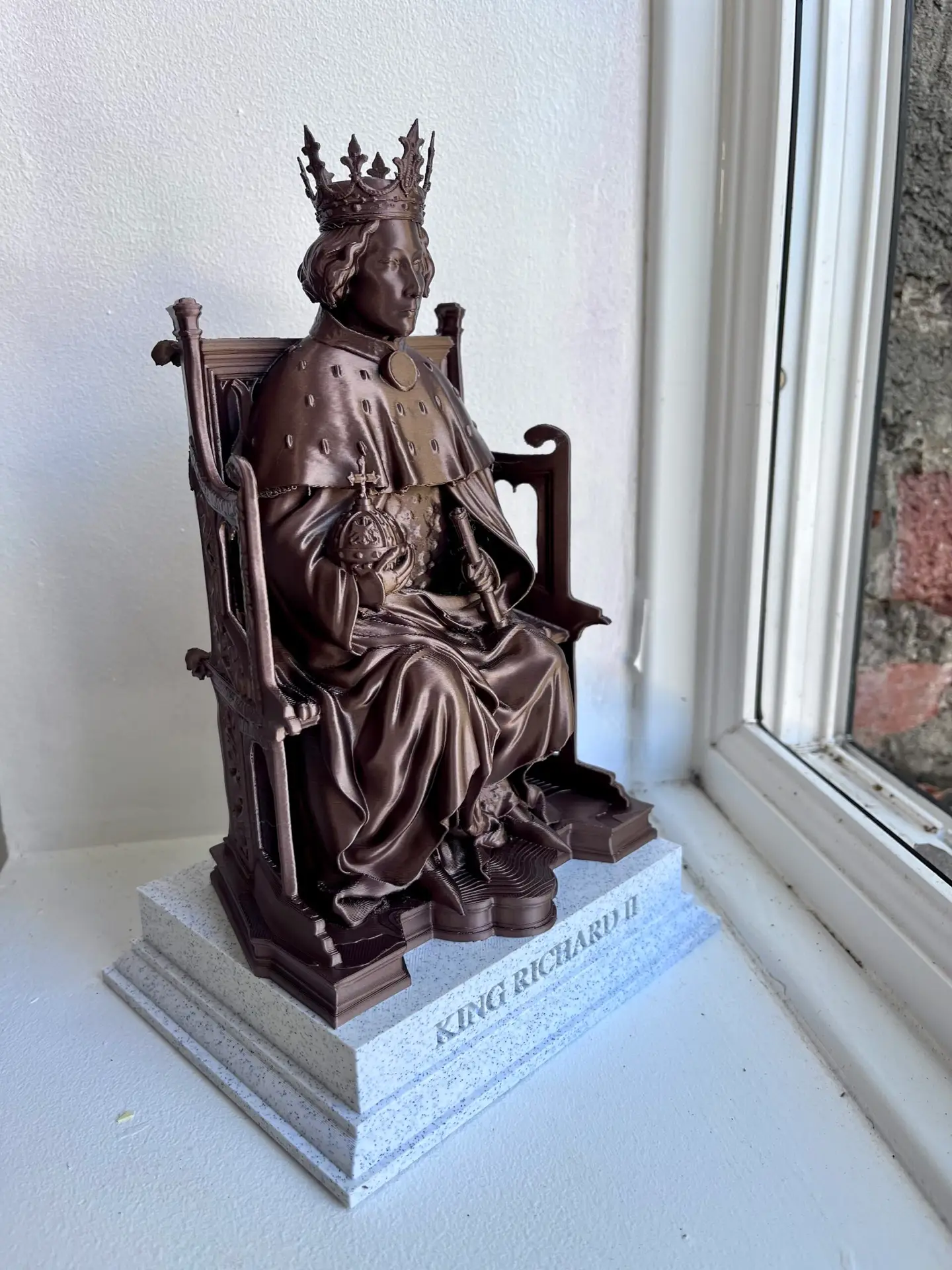
Celebrate the life and legacy of King Richard II, one of medieval England’s most fascinating and controversial monarchs, with this beautifully detailed historical statue. Renowned for his belief in the divine right of kings, his patronage of the arts and architecture, and the dramatic events that led to his deposition, Richard II remains one of the most studied rulers of the Plantagenet dynasty.

Additional information

Weight 0.4 kg
Dimensions 10 × 15 × 22 cm
Colour

colour, white

Born on 6 January 1367 at Bordeaux, Richard was the son of Edward of Woodstock, better known as the Black Prince, and Joan of Kent. As the grandson of King Edward III, Richard inherited the English throne in 1377 at just ten years old following the deaths of both his father and grandfather. His early reign was governed by powerful nobles while the young king learned the responsibilities of monarchy.

One of the defining events of Richard’s reign was the Peasants’ Revolt of 1381. Although only fourteen years old, Richard personally met the rebels at Smithfield after the death of their leader, Wat Tyler. His courage during the crisis helped restore order and demonstrated remarkable confidence for such a young monarch.

Richard married Anne of Bohemia in 1382. Their marriage is widely believed to have been affectionate, although they had no children. Anne died of plague in 1394, and Richard was said to have been deeply grief-stricken, even ordering the destruction of the palace where she had died. In 1396 he married Isabella of Valois, the young daughter of King Charles VI of France, but the marriage also produced no children.

Unlike many medieval kings, Richard showed a strong interest in culture, religion and the arts. He commissioned magnificent buildings, supported poets such as Geoffrey Chaucer and encouraged an elaborate royal court that emphasised ceremony and majesty. Richard believed firmly that the king ruled by divine authority, a philosophy that increasingly brought him into conflict with England’s leading nobles.

As his reign progressed, tensions with the nobility intensified. His increasingly authoritarian style of government and disputes with powerful aristocrats eventually led to his cousin, Henry Bolingbroke, returning from exile in 1399 to claim the throne. Richard was deposed, imprisoned and Henry became King Henry IV, beginning the House of Lancaster.

Richard II died in captivity at Pontefract Castle in early 1400. While the exact circumstances remain uncertain, many historians believe he either died from starvation or was murdered. He was originally buried at Kings Langley before being reinterred with Anne of Bohemia in Westminster Abbey, where their magnificent tomb can still be seen today.

Today, Richard II is remembered as a complex monarch whose reign marked a turning point in English history. His life inspired William Shakespeare’s famous history play Richard II, ensuring his story has remained part of British culture for over four centuries.